If you have never thought hard about trims, here is the one number that organizes everything: hair grows about half an inch per month, on average. Some people grow a little faster, some slower, and growth varies by season and by person, but half an inch a month is the standard figure stylists plan around. That means six inches a year before a single strand is cut. Every trimming decision is arithmetic against that number, and whether a trim helps or hurts depends entirely on what you are trying to do.
This walkthrough is for anyone who has sat in a chair in York unsure whether they even need a trim, or nodded along to a schedule they did not understand. Here is what actually happens, step by step, and how to set your own interval.
Step one: decide what the hair is for right now
- Pick your goal out loud. Growing length, maintaining a current style, and repairing damaged ends are three different goals with three different trim schedules. Saying the goal at the start of the appointment changes what the stylist recommends, so say it before the scissors come out.
- Understand what a trim removes. A maintenance trim takes off a quarter to half an inch, just the worn ends. A cleanup of genuinely split or damaged hair may need more. The phrase to use is dusting if you want the smallest possible amount taken while still clearing the frayed tips.
- Do the growth math for your goal. If you are growing and trim a quarter inch every twelve weeks, you remove about one inch a year and keep roughly five. If you skip trims for a year to save length, splits travel up the strand and the eventual cut often takes more than the trims would have.
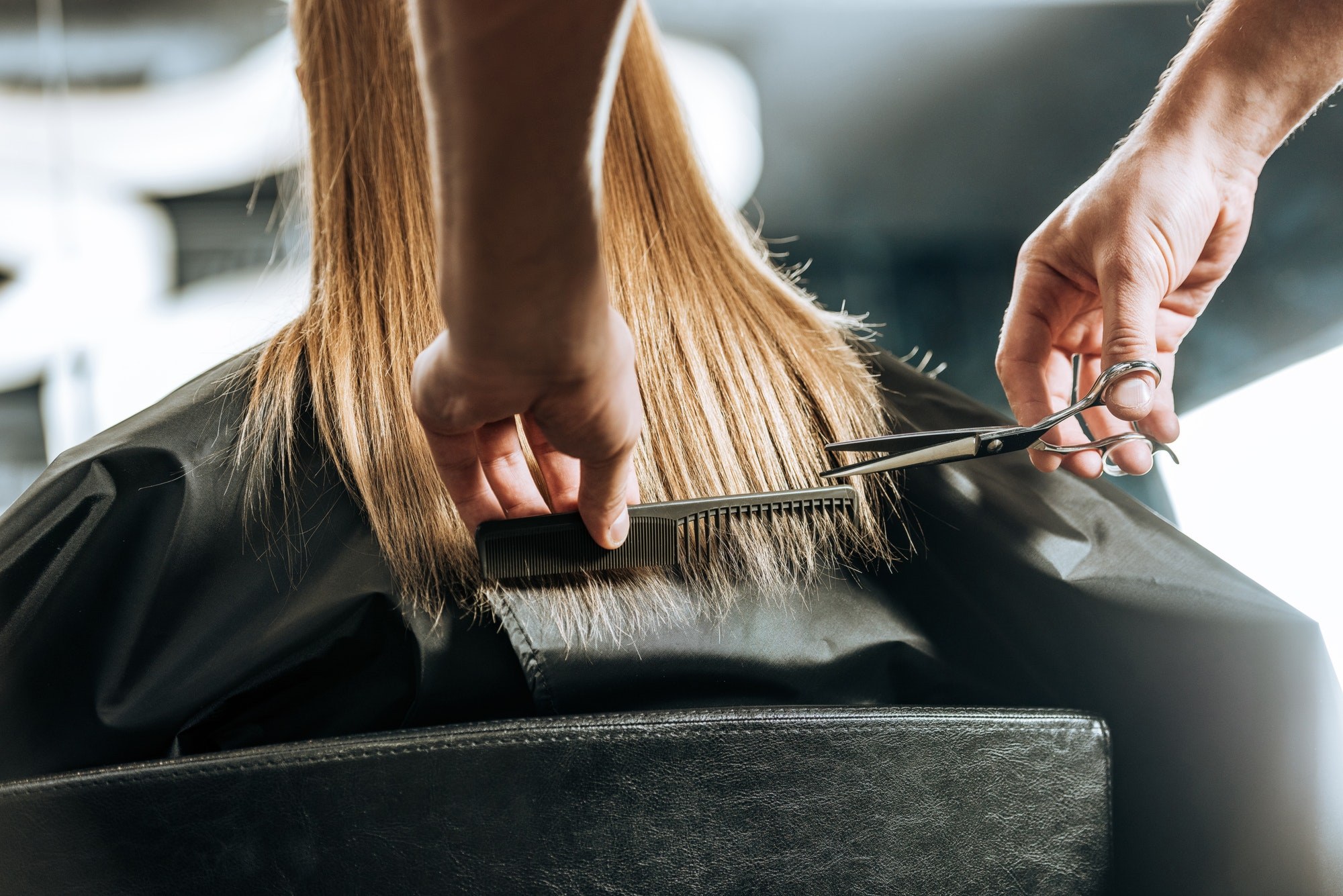
- Watch the cut happen and ask questions. A good stylist will show you the amount before cutting if you ask. Seeing a quarter inch measured against a comb once teaches you more than a year of guessing.
- Check how your hair behaves in the weeks after. Freshly trimmed ends tangle less, dry smoother, and hold a style longer. When those qualities fade and the ends start catching on each other, your personal interval is announcing itself.
- Set the next appointment by your hair type. Short and precision cuts lose their shape fastest and often need four to six weeks. Long hair in good condition can go ten to twelve weeks between dustings. Heavily lightened or heat-styled hair usually needs the shorter end of any range.
Why split ends do not stay at the ends
A split end is a strand that has frayed at the tip, and fraying travels. Left alone, the split works its way up the hair shaft the way a run climbs a stocking, weakening more of the strand as it goes. That is the entire argument for regular small trims: a quarter inch now prevents an inch or more later. Products can temporarily glue a split together so it looks and feels smoother, and that is genuinely useful for appearance, but nothing repairs the strand itself. The split is a structural failure, and the only complete fix is cutting above it.
The half-inch rule, applied
The rule of thumb is simple: never let the damage outgrow the growth. If your ends fray faster than half an inch a month of new damage, which happens with frequent heat styling and lightening, trims must be more frequent or the hair gets shorter in effect even while it grows, because it keeps breaking at the ends. Many people who say their hair will not grow past a certain length are actually growing fine at the scalp and losing it all at the bottom. A stylist at Salon 803 can check the ends against the roots and tell you which end of the hair your length problem lives on.

Signs you have waited too long
Ends that tangle into knots within minutes of brushing, a rough or see-through look to the last two inches, white dots along the strand where it is about to break, and styles that go frizzy at the bottom while the top behaves are all overdue signals. None of them are emergencies, but each one means the next trim has to take a little more than the last one did.
Common questions
Does trimming make hair grow faster?
No. Growth happens at the scalp and trims cannot change it. Trims make hair appear to grow better because the ends stop breaking off, so the length you gain actually stays.
How much is a dusting, exactly?
Roughly an eighth to a quarter of an inch, just enough to clear frayed tips. If you are nervous about length, ask the stylist to show you the amount against a comb before cutting.
Can I stretch trims if I never use heat?
Yes. Hair that is not heat-styled or lightened frays much more slowly, and intervals of twelve weeks or longer are reasonable. Watch the ends and let their condition, not the calendar alone, make the call.
Photos in this guide are representative stock images.
← All guides from Salon 803← Back to Salon 803